
Businesses have more toolsthan ever. They rarelyunderstand each other.
Analytics can tell you what happened. Search tools tell you where you rank. CRMs tell you what's in the pipeline. Email platforms tell you who opened. Accounting tells you what was paid.
Each one understands a small part of the business. The owner is left to connect the dots — usually by hand, usually late, usually only when something has gone wrong.
FullView exists to connect those dots.
 FullView
Every module reads thesame business.
A prospect discovered by the AI Sales Agent shouldn't become a stranger the moment they reply. A website opportunity shouldn't disappear before it reaches the content plan. Every FullView module works from the same shared understanding of the business — so nothing loses its context.
FullViewAn operating system —not another dashboard.
FullView isn't built to show you charts and stop there. Every module works inside the same loop: observe what's happening, understand what it means, prioritize what matters, act on it, measure the result, and get smarter for next time.
Designed for peoplerunning real businesses.
Owners don't want another dashboard to babysit. Teams don't need another disconnected login. Five principles guide how FullView is built.
AI is only useful whenit knows the business.
A generic model can guess. A model given the business, the customer, the website, the pipeline, and the goal doesn't have to. FullView's AI reads the same context every module sees — so its recommendations sound like they came from someone who actually works there.
▌One platform.Twelve modules.Deployed as you need them.
You don't get FullView all at once — you turn on what the business needs, when it needs it. Everything joins the same context automatically. Nothing has to be re-wired.
The six ideas behindeverything we build.
Built by people who spentyears watching softwarenot talk to itself.
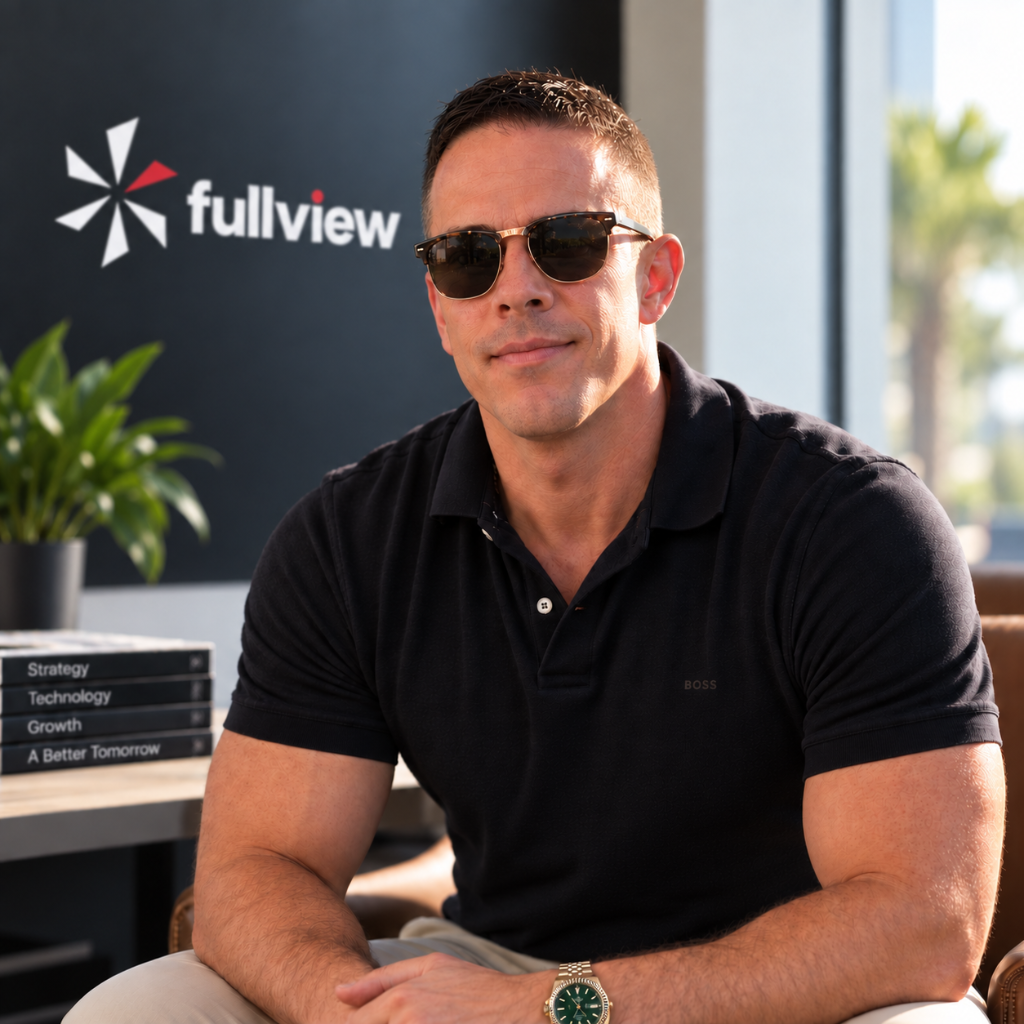
For more than 20 years, I've worked with businesses to build websites, digital systems, marketing technology and business- development workflows. Over that time, I watched the software stack become more powerful, but also more fragmented. Analytics in one place. Search data in another. CRM, email, reporting, AI and business intelligence all operating separately.
FullView grew from a simple idea: businesses shouldn't need five different systems to understand what's happening and what to do next. The platform should already know the context.