
01
AI business intelligence
Turn business signals into useful understanding. Reasoning that behaves like a colleague, not a chatbot.
FullView isn't adding another feature to an established category. It's an attempt to rethink how businesses interact with their data, their software, their AI and their workflows — starting from the observation that most companies still run across a dozen disconnected systems.

Each of these is a real engineering and design problem, not a marketing category. If any of them are the kind of thing you'd enjoy spending years on, we should probably talk.
Turn business signals into useful understanding. Reasoning that behaves like a colleague, not a chatbot.
Let software understand how different parts of a company relate — customers, revenue, sales, content, search.
Move from insight to action. Trustworthy workflows that behave predictably in production.
Bring existing tools into a shared operating environment. Everyone's stack. One reality.
Understand what drives revenue and where the opportunities actually sit — continuously, not quarterly.
Make complex systems understandable. The interface is where power becomes usable.
These aren't corporate values. They're the working assumptions we come back to when a problem is genuinely open — which, at this stage of the company, is most of them.
Technology matters only when it solves something useful. Every module inside FullView begins as a real question a business is trying to answer.
Isolated data is less useful than data that knows how it relates. Almost every hard problem in FullView is a context problem in disguise.
The underlying system can be sophisticated. The experience shouldn't feel that way. Every interface earns its weight in clarity.
Architecture matters when the ambition is bigger than one feature. We're building a platform, not a demo.
Existing software patterns are frequent, not automatically correct. If a pattern gets copied without being questioned, it usually should be.
Small interaction and design decisions shape whether software feels exceptional. Everything ships with an editor's eye on it.
At this stage the disciplines overlap on purpose. An engineering decision can move the product. A design decision can change how AI is understood. A business insight can rewrite an entire module's architecture. The people building FullView have an unusually direct relationship with what gets shipped.
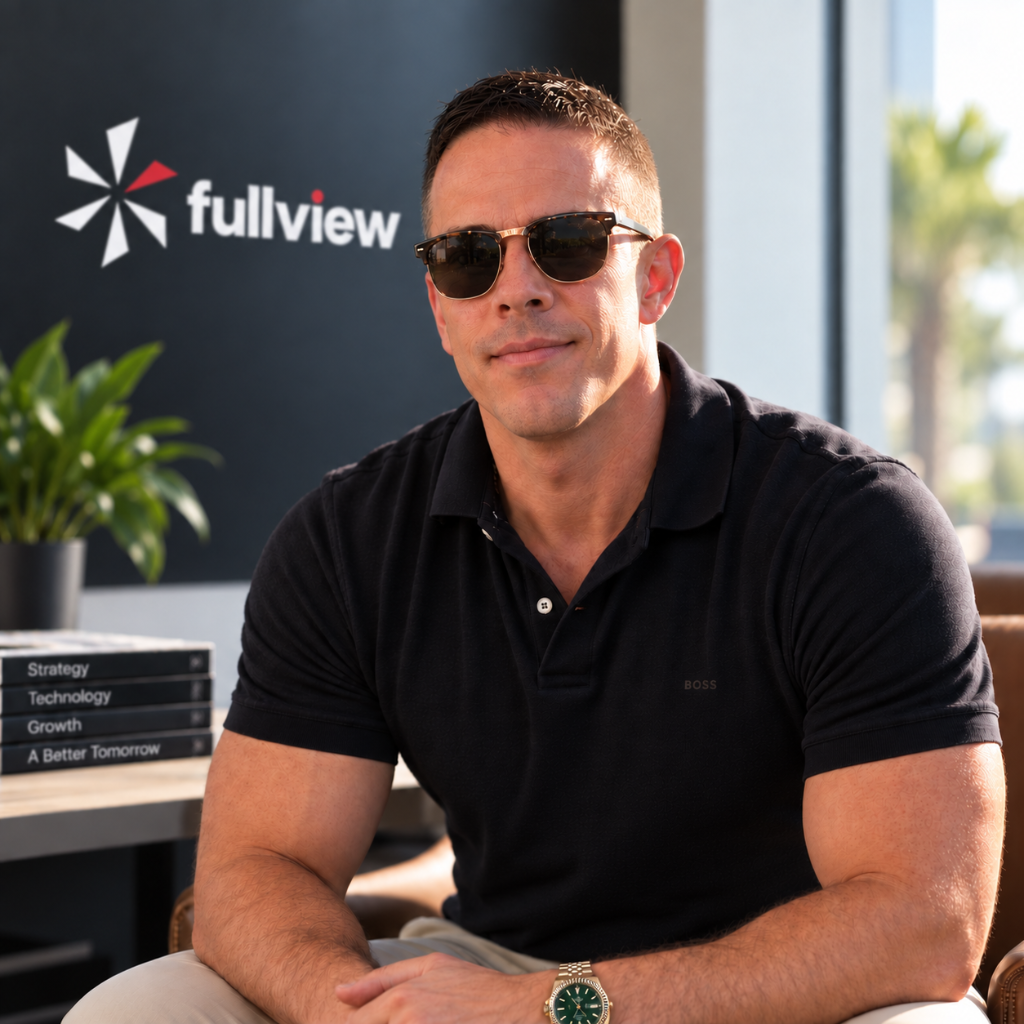
For more than 20 years I've built websites, digital systems and business-development workflows for small and mid-sized companies. The pattern was always the same — the software got more powerful, and more fragmented, at the same time.
FullView is my attempt to bring that context back together. The About page is where the full story lives; the Careers page exists because I can't build the rest of it alone.
We're less interested in credentials than in a particular shape of thinking. If several of these feel true, we should probably talk.
We hire deliberately. When roles are open, they show up here. When they aren't, we still want to meet people who might belong.
We're building carefully. New opportunities will appear here as FullView grows — and each one will match a real need, not a quarterly quota.
The exact process depends on the role. What stays consistent is that every step is genuine work — no theater rounds, no filler interviews.
If you believe your work could meaningfully contribute to FullView, we'd rather hear from you than miss you. A brief introduction is enough.
A few things people ask before introducing themselves. Where a policy hasn't been set, we'd rather say so than invent one.